
I am an interdisciplinary environmental justice scholar whose research and teaching engage multiple epistemologies through the combined use of social scientific, humanistic, and scientific methods. I broadly explore how different framings of environmental change compel particular social and political actions, as well as the affective and material consequences of those actions on people and places. By focusing on the sociopolitical drivers of environmental change, I address how human vulnerability and land-use decisions constitute one another. To this end, I use the analytical tools of political ecology to address questions at the interface of resource governance, critical geopolitics, and environmental history.

Climate activism at Cop 23, Bonn
Climate justice
At its core, climate justice is concerned with the fact that the populations who have historically emitted the fewest greenhouse gases typically bear the brunt of climate change impacts. This fundamental inequity between responsibility and harm has animated decades of research, activism, and policy. My research intervenes in this space by analyzing what produces uneven vulnerability to climate change, mainstream and transformative approaches to adaptation, and the political economy of climate adaptation.

Locating sites of water management infrastructure in the Mekong Delta.
Infrastructure
Infrastructure is the substrate on which societies function, the conduits that connect people with essential functions. It assumes diverse forms: as transmission lines, ports, aqueducts, submarine cables, and so much more. Yet, in delivering services for many, it also denies, displaces, and dispossesses untold others. My work examines the role of water infrastructure in power-laden trajectories of colonial and neoliberal development, environmental harm, and state-making and maintenance. In interrogating these histories and dynamics, it seeks to locate opportunities for more equitable and just infrastructural relations.
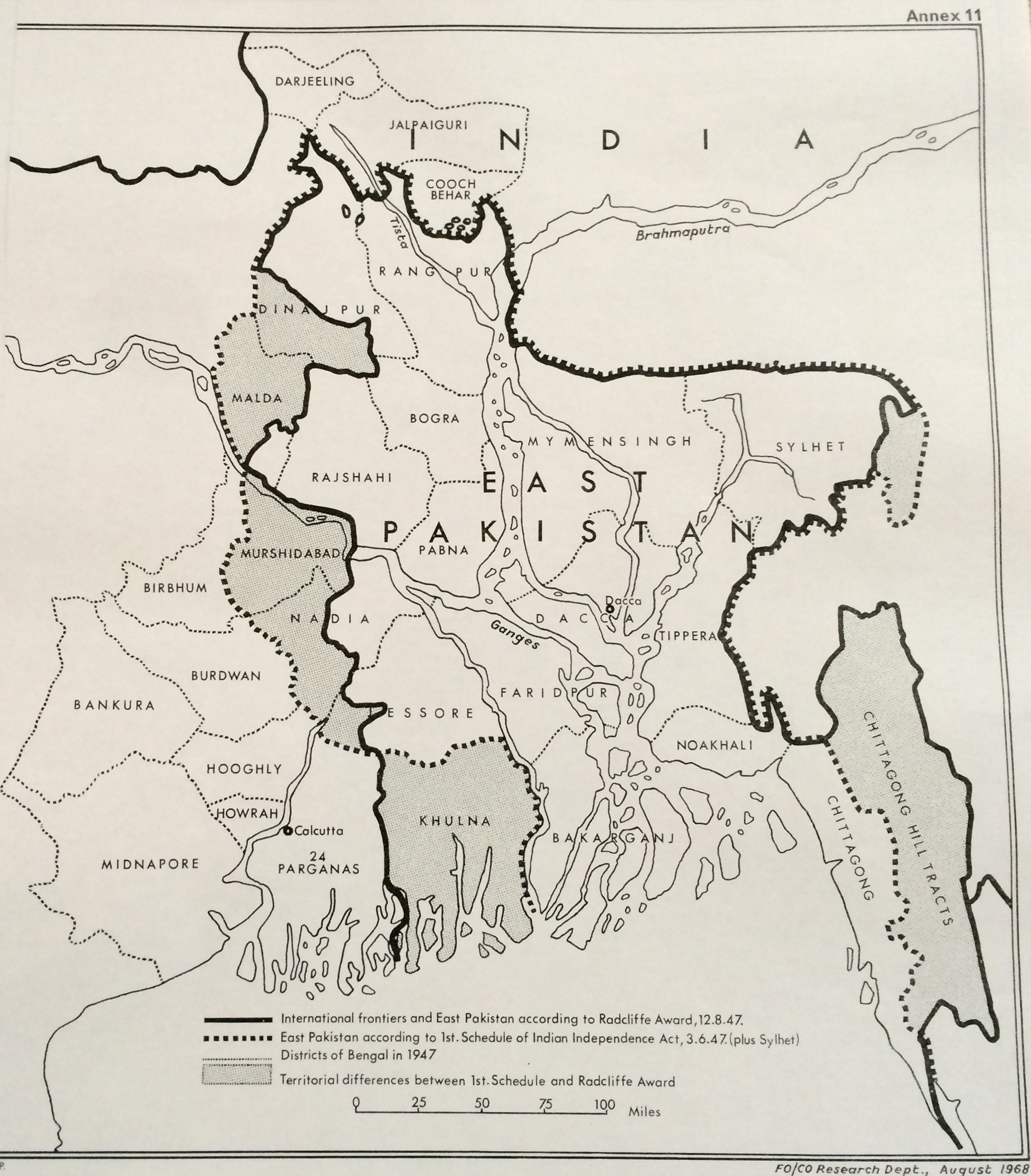
The radcliffe line established the international rivers between india and east pakistan (now bangladesh) in 1947. (Image: British library)
International water politics
Nearly every non-island state sits partially or wholly within a transboundary river basin. My research examines how states negotiate conflicts around shared water resources, including issues of resource distribution, access, and hazards. This project focuses on conflicts between India and Bangladesh over the Ganges River and examines how uneven power dynamics between states affect international water cooperation. This work also draws attention to the relationship between state borders and international waterbodies, demonstrating how borders and international rivers influence each other and with what effects.

Brisaster latifrons larva (image: michael hart)
Marine science and geopolitics
My early work as an oceanographer focused primarily on using population genetics to infer patterns of larval dispersal and population connectivity among fish and invertebrates. I also contributed to research on marine debris, deep-sea benthic habitats, Hawaiian fisheries, and marine biogeochemistry. The thread that connects these disparate projects was an interest in applying diverse methods to addressing biodiversity loss, population declines, and habitat degradation in near-shore and open-ocean environments. More recently, this work has expanded to analyzing the central role of marine spaces in geopolitical contests and imperial claims to space and resources.